
Iceland’s Sovereignty Dispute
Operation NapoleonThis thread follows Icelandic officials from uneasy cooperation with American military authorities to open confrontation, then shows how public pressure is contained by negotiated explanations and competing accounts.
increasing Bearing strength in each event
 decreasing
Bearing strength in each eventdecreasingThe First Emergency Meeting

An Unexplained Deployment
The Americans Seek Cooperation
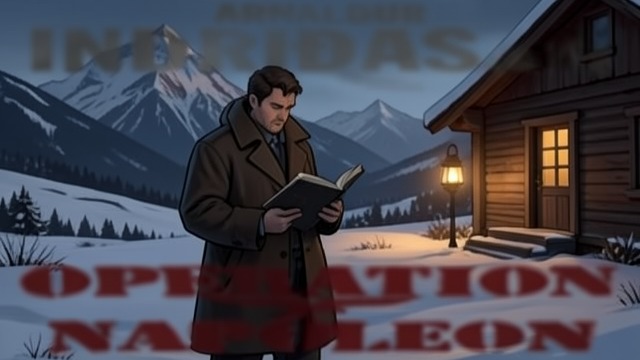
The U.S. admiral and Immanuel Wesson summon Iceland’s prime minister and foreign minister to a secret meeting. They say a lost American aircraft from the Second World War has resurfaced on Vatnajökull and that troops must recover it before transporting it home.
Permission Without Disclosure
The Americans call the mission a scientific expedition and ask for secrecy, yet refuse to explain what makes the aircraft sensitive. Iceland’s ministers object that they have been informed of a decision already in motion rather than asked to authorize it.
The meeting exposes the imbalance at the centre of the relationship. The American side expects Icelandic cooperation while withholding the facts needed for informed consent, forcing the government to weigh alliance and economic ties against its authority over its own territory.
The False Explanations
Stories Designed to Contain
Secrecy Becomes Policy
When the Icelandic officials reject a vague request for cooperation, the Americans offer alternative explanations. The operation can be described as small NATO winter exercises, or as the recovery of an aircraft carrying German nuclear scientists whose history could cause political embarrassment.
A Necessary Public Line
The shifting accounts do not answer the prime minister’s central question: why must the plane remain secret? Instead, they ask the Icelanders to provide consistent explanations if troop movements attract attention, making the local government part of the cover.
The evasions weaken trust even as they attempt to preserve it. Each substitute story increases the distance between what officials are told and what they can responsibly tell their own public, setting up a confrontation when events on the glacier become impossible to dismiss as hypothetical.
The Glacier Forces a Second Meeting
The Cost of Evasion
Reports Reach Reykjavík
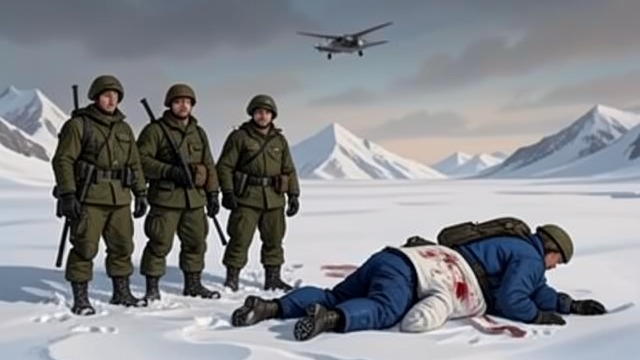
By the second meeting, Icelandic officials have heard that armed American troops are on the glacier and that two members of the Reykjavík Air-Ground Rescue Team have been found after an apparent accident. One is dead and the other is critically injured; the rescue team says it has encountered military personnel.
The Government Demands Answers
The prime minister challenges the Americans over the soldiers’ weapons, the casualties, and the failure to respond to the team’s request for assistance. The admiral denies responsibility and again urges officials to treat the deployment as a limited exercise.
The meeting’s stakes have shifted. The issue is no longer merely a secret aircraft or a violation of protocol: Icelandic lives have been lost or endangered, and the government must decide whether to protect the alliance’s public face or defend its authority against an operation carried out without transparent consent.
An Ultimatum and a Bomb Story
Threats and New Claims
A Demand to Clear the Glacier
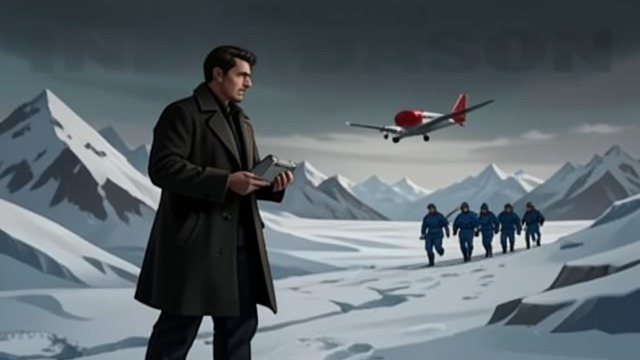
Immanuel Wesson bluntly demands that the Icelandic rescue team be removed from the area, implying that the team’s presence could interfere with the American operation. The prime minister rejects the demand and says the government cannot simply order Icelandic volunteers off their own glacier.
The Bomb as Leverage
As the Icelanders prepare to leave, Wesson claims that a German hydrogen bomb lies aboard the aircraft and could endanger the rescue team. The Americans describe it as a lost nuclear weapon and urge the prime minister to call the team back, turning an alarming claim into an attempt to regain control of the situation.
The bomb story temporarily changes the negotiating pressure without resolving the underlying question of whether it is true. Faced with a warning of catastrophe and evidence of American disregard for Icelandic sovereignty, the government must act in a fog of claims supplied by the very power whose operation it is trying to scrutinize.
Public Protest, Private Containment
The Story Is Managed
Competing Public Accounts
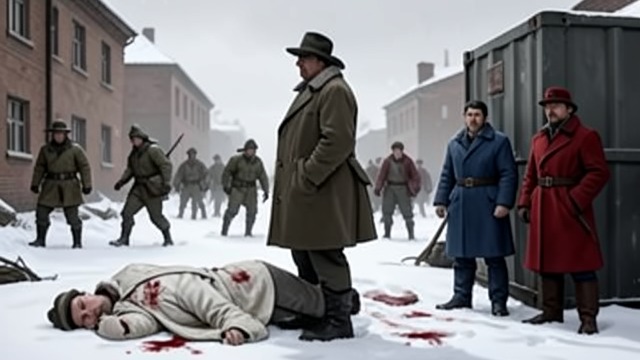
After the operation, American spokesmen describe the deployment as conventional winter exercises involving Dutch and Belgian NATO forces. The aircraft becomes, in different versions, lost tracking equipment, part of a staged rescue exercise, or a search for gold; officials deny knowledge of a German plane on the glacier.
A Diplomatic Settlement
The Icelandic Government says it granted permission for exercises, while the army apologizes for soldiers who fired on the rescue team and promises an inquiry and compensation. The wider allegations circulate in the press, but no shared public account acknowledges the full operation or its casualties.
The dispute ends not with an agreed truth but with managed disagreement. Icelandic officials preserve some leverage through public protest, while the Americans disperse attention through multiple explanations; in time, media interest fades and the original imbalance of power remains largely intact.
Friday 29 January, 2000, around 9 p.m.
Late Friday 29 January, during the first meeting
Saturday 30 January, 2000, around 9 p.m.
Saturday 30 January, 2000, during the second meeting
From 31 January into the following months
